Vocabulary
Basic Thai Words: Hello, Thank You and the First Phrases to Learn
Published · 6 min read
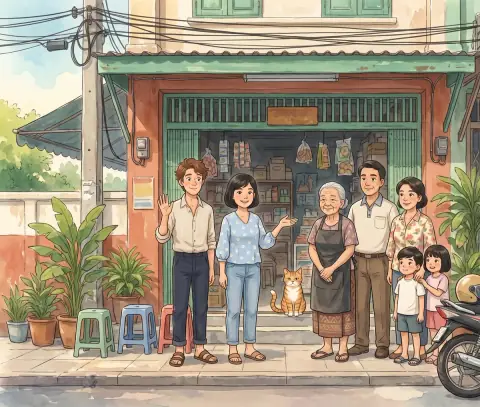
The most important basic Thai words are สวัสดี sà-wàt-dii (hello), ขอบคุณ kɔ̀ɔp-kun (thank you), ขอโทษ kɔ̌ɔ-tôot (sorry, excuse me) and ไม่เป็นไร mâi-bpen-rai (never mind, you’re welcome). Each of them is normally followed by a polite particle: ครับ kráp if you are a man, ค่ะ kâ if you are a woman. With these four words and the right particle you can already greet, thank and apologise politely anywhere in Thailand.
This list covers the words you will use every single day, with what each one really means and when Thai people say it. A tip before you start: Thai is a tonal language, so copy the tone of each word as well as its sounds. The accents in the transliteration show it, and our guide to the five Thai tones explains how they work.
First, the polite particle: ครับ or ค่ะ
Almost every phrase on this page ends with a small word that has no translation and changes nothing in the meaning, but makes the sentence polite. Its form depends on who is speaking, not on who is listening:
| Speaker | Statement | Question |
|---|---|---|
| Man | ครับ kráp | ครับ kráp |
| Woman | ค่ะ kâ | คะ ká |
So a man says สวัสดีครับ sà-wàt-dii kráp and a woman says สวัสดีค่ะ sà-wàt-dii kâ. Leaving the particle out with a stranger sounds abrupt. The details, including the difference between ค่ะ and คะ, are in our guide to Thai polite particles.
How do you say hello in Thai?
สวัสดี sà-wàt-dii is hello at any time of day: there is no separate “good morning” or “good evening” in everyday speech. In shops, offices and with anyone you do not know well, always add the particle: สวัสดีครับ, สวัสดีค่ะ. Among friends you will hear the short form หวัดดี wàt-dii.
In formal situations, สวัสดี comes with the wai (ไหว้ wâai): palms pressed together at chest level, fingertips towards the chin, with a slight bow of the head. The wai follows hierarchy. The younger or junior person wais first and the other returns it; the higher the hands, the more respect, and monks receive the highest wai. You do not wai children or the staff serving you: when the cashier at a 7-Eleven greets you with a wai, a smile and a nod are the right answer. Nobody expects a foreigner to get it perfect, and a warm สวัสดีครับ with a smile is always welcome.
How do you say thank you in Thai?
ขอบคุณ kɔ̀ɔp-kun is thank you, with the particle: ขอบคุณครับ, ขอบคุณค่ะ. To insist, add มาก mâak (“very”): ขอบคุณมากครับ kɔ̀ɔp-kun mâak kráp, “thank you very much”.
You may see it romanised “khop khun” or “kob kun” on the web. The first syllable has a low tone and a long ɔɔ (like the vowel in British English “law”), and its final p is not released: the lips close and stop.
Between friends, or to someone younger, Thai people also say ขอบใจ kɔ̀ɔp-jai. It is warm but familiar, so as a learner keep ขอบคุณ for everyone else.
Sorry and excuse me: ขอโทษ
ขอโทษ kɔ̌ɔ-tôot covers both “sorry” and “excuse me”. You say it when you bump into someone, when you want to squeeze past in a crowded BTS car, or before asking a stranger a question: ขอโทษครับ, ห้องน้ำอยู่ที่ไหนครับ kɔ̌ɔ-tôot kráp, hɔ̂ng-náam yùu tîi-nǎi kráp (“Excuse me, where is the toilet?”).
Do not confuse it with เสียใจ sǐa-jai, which means “sad” or “sorry” in the sense of regret and condolence: “I’m sorry to hear that”, not “oops”.
Never mind: ไม่เป็นไร
ไม่เป็นไร mâi-bpen-rai literally means “it isn’t anything”. It is the standard reply to both ขอบคุณ and ขอโทษ, so it covers “you’re welcome”, “no problem”, “don’t worry” and “never mind”. Someone steps on your foot and apologises: ไม่เป็นไรครับ. You thank a neighbour for lending you an umbrella: they answer ไม่เป็นไร.
It also expresses an attitude Thai people value: not making a fuss, letting small problems go. You will hear it many times a day.
Yes and no in Thai
Thai has no single word for “yes” or “no”. There are three ways to answer, depending on the question.
1. Repeat the verb. Most yes/no questions end in ไหม mǎi, and you answer with the verb, or ไม่ mâi (“not”) + the verb:
| Question | Yes | No |
|---|---|---|
| หิวไหม hǐu mǎi (hungry?) | หิว hǐu | ไม่หิว mâi hǐu |
| ชอบไหม chɔ̂ɔp mǎi (do you like it?) | ชอบ chɔ̂ɔp | ไม่ชอบ mâi chɔ̂ɔp |
| ได้ไหม dâai mǎi (can you? is it OK?) | ได้ dâai | ไม่ได้ mâi dâai |
2. ใช่ / ไม่ใช่. ใช่ châi means “that’s right” and ไม่ใช่ mâi-châi “that’s not right”. Use them when the question checks a fact: คุณเป็นคนฝรั่งเศสใช่ไหม kun bpen kon fà-ràng-sèet châi mǎi (“You’re French, right?”) → ใช่ครับ.
3. The particle alone. ครับ or ค่ะ on its own means “yes”, “OK” or “I’m listening”. It is the most common way to agree.
And for the street vendor who offers you a third bag of mango: ไม่เอาครับ / ไม่เอาค่ะ mâi ao, “no thanks, I don’t want any”.
How to say please in Thai
There is no single word for “please” either. Politeness comes from the structure of the request:
- ขอ kɔ̌ɔ + thing = “may I have…”: ขอน้ำหน่อยครับ kɔ̌ɔ náam nɔ̀i kráp (“Some water, please”).
- ช่วย chûai + verb + หน่อย nɔ̀i = “could you please…”: ช่วยถ่ายรูปหน่อยได้ไหมคะ chûai tàai-rûup nɔ̀i dâai mǎi ká (“Could you take a photo, please?”).
The little word หน่อย nɔ̀i (“a bit”) softens the request, and ได้ไหม dâai mǎi turns it into a question. On signs you will also see กรุณา gà-rú-naa, a formal written “please”: กรุณาถอดรองเท้า gà-rú-naa tɔ̀ɔt rɔɔng-táao, “please take off your shoes”, at the entrance of a temple or a home.
How are you in Thai?
สบายดีไหม sà-baai-dii mǎi means “are you well?”. The answer is สบายดี sà-baai-dii (“I’m fine”), often followed by แล้วคุณล่ะ lɛ́ɛo kun lâ (“and you?”).
In practice Thai people ask it mostly when they have not seen someone for a while. In daily life, the neighbour in your soi is more likely to greet you with a question that is not really a question: ไปไหน bpai nǎi (“where are you going?”) or กินข้าวหรือยัง gin kâao rʉ̌ʉ yang (“have you eaten yet?”). A vague answer is fine: กินแล้ว gin lɛ́ɛo (“I have”), or the name of where you are going.
How do you say goodbye in Thai?
Textbooks give ลาก่อน laa-gɔ̀ɔn, but it means farewell, for a long time or for ever. Saying it to the 7-Eleven cashier sounds like a scene from a film. Use instead:
| Thai | Transliteration | When |
|---|---|---|
| สวัสดีครับ / ค่ะ | sà-wàt-dii kráp / kâ | polite goodbye, as you leave a shop or an office |
| ไปก่อนนะ | bpai gɔ̀ɔn ná | “I’m off”, to friends and colleagues |
| แล้วเจอกัน | lɛ́ɛo jəə gan | “see you” |
| เจอกันพรุ่งนี้ | jəə gan prûng-níi | “see you tomorrow” |
| บ๊ายบาย | báai-baai | “bye-bye”, casual |
My name is… in Thai
To introduce yourself, use ชื่อ chʉ̂ʉ (“to be called”) after the pronoun for “I”, which also depends on who speaks: ผม pǒm for a man, ฉัน chǎn for a woman.
ผมชื่อฮิวโก้ครับ ผมมาจากฝรั่งเศส pǒm chʉ̂ʉ hiu-gôo kráp. pǒm maa jàak fà-ràng-sèet. My name is Hugo. I come from France.
To ask someone’s name: คุณชื่ออะไรครับ kun chʉ̂ʉ à-rai kráp (“What’s your name?”). And to finish: ยินดีที่ได้รู้จัก yin-dii-tîi-dâai-rúu-jàk, “nice to meet you”. Most Thai people go by a short nickname, ชื่อเล่น chʉ̂ʉ-lên, so the name you get may be one syllable long.
This is exactly the conversation of the very first Kru May story, Hugo introduces himself, where Hugo meets his neighbour Mali in the soi. In Mali’s family he has to greet her whole family at once.
“I don’t understand” and other survival phrases
| Thai | Transliteration | Meaning |
|---|---|---|
| ไม่เข้าใจ | mâi kâo-jai | I don’t understand |
| เข้าใจไหม | kâo-jai mǎi | do you understand? |
| ไม่รู้ | mâi rúu | I don’t know |
| พูดช้า ๆ หน่อยได้ไหม | pûut cháa-cháa nɔ̀i dâai mǎi | could you speak slowly, please? |
| พูดอีกทีได้ไหม | pûut ìik tii dâai mǎi | could you say that again? |
| พูดไทยได้นิดหน่อย | pûut tai dâai nít-nɔ̀i | I speak a little Thai |
Thai people are usually delighted when a foreigner tries, and they will slow down if you ask. ช้า ๆ cháa-cháa is ช้า (“slow”) doubled with the sign ๆ, which repeats the word before it.
Basic Thai words at a glance
| Thai | Transliteration | Meaning |
|---|---|---|
| สวัสดี | sà-wàt-dii | hello; goodbye |
| ขอบคุณ | kɔ̀ɔp-kun | thank you |
| ขอโทษ | kɔ̌ɔ-tôot | sorry; excuse me |
| ไม่เป็นไร | mâi-bpen-rai | never mind; you’re welcome |
| ใช่ / ไม่ใช่ | châi / mâi-châi | that’s right / that’s not right |
| ไม่เอา | mâi ao | no thanks, I don’t want it |
| ขอ… หน่อย | kɔ̌ɔ… nɔ̀i | may I have…, please |
| สบายดีไหม | sà-baai-dii mǎi | how are you? |
| ไปก่อนนะ | bpai gɔ̀ɔn ná | I’m off, bye |
| ไม่เข้าใจ | mâi kâo-jai | I don’t understand |
How to practise these words
Say them out loud, with the particle, every time you can: to the motorbike taxi driver, at the coffee stall, to the neighbour. Short words like these are learned by use, not by lists. For more phrases organised by situation, see our Thai phrases for travelers. And if you want to hear them in real scenes, every sentence in Kru May has audio at natural and slow speed, and every word can be tapped to see its meaning and tone.
Questions and answers
How do you say hello in Thai?
สวัสดี (sà-wàt-dii), followed by ครับ (kráp) if you are a man or ค่ะ (kâ) if you are a woman. It works at any time of day and also means goodbye.
How do you say thank you in Thai?
ขอบคุณครับ (kɔ̀ɔp-kun kráp) for a man, ขอบคุณค่ะ (kɔ̀ɔp-kun kâ) for a woman. Add มาก (mâak) for “thank you very much”: ขอบคุณมากครับ.
How do you say yes and no in Thai?
There is no all-purpose yes or no. You answer with the verb of the question (หิวไหม? → หิว “yes” / ไม่หิว “no”), with ใช่ / ไม่ใช่ (châi / mâi-châi, “that’s right / that’s not right”), or simply with ครับ / ค่ะ to agree.
What does mai pen rai mean?
ไม่เป็นไร (mâi-bpen-rai) means “it’s nothing”: never mind, no problem, or you’re welcome. It is the usual reply to thank you and to sorry.
Practice with these stories
Read the words from this article in context, in illustrated stories with audio.

Hugo introduces himself
ฮิวโก้แนะนำตัว
Hugo has just moved into a Bangkok soi. He meets his neighbor.
Mali’s family
ครอบครัวมะลิ
Hugo is invited next door and meets everyone at once. There are a lot of them.

Keep reading

Thai Numbers: How to Count from 1 to 1,000,000
Learn Thai numbers from 0 to a million: the ten digits, the two irregular numbers, how to build any number, Thai numerals and how to read prices.
Thai Family Words: Mother, Father, Siblings, Grandparents and More
Every Thai family word you need: พ่อ, แม่, พี่, น้อง, the four grandparents, uncles and aunts by age and side, and why you call a waiter พี่.
How to Say I Love You in Thai (and Other Words of Affection)
How to say I love you in Thai: ผมรักคุณ, ฉันรักคุณ, รักนะ, plus I miss you, pet names, compliments and the ways Thais really show affection.