Vocabulary
How to Say I Love You in Thai (and Other Words of Affection)
Published · 6 min read
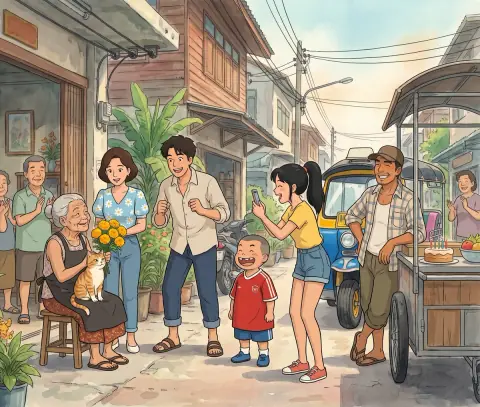
To say “I love you” in Thai, a man says ผมรักคุณ pǒm rák kun and a woman says ฉันรักคุณ chǎn rák kun. รัก rák (high tone) is the verb “to love”. In real life, couples rarely use the full sentence: they say รักนะ rák ná, a softer “love you”. And Thais tend to show love more than they say it: with คิดถึง kít-tʉ̌ng (“I miss you”), with care, and very often with food.
This article covers the words for love and affection, the pet names, the small particles that make a sentence tender, and the cultural habits that matter as much as the vocabulary.
How to say “I love you” in Thai
| Thai | Transliteration | Meaning | When |
|---|---|---|---|
| ผมรักคุณ | pǒm rák kun | I love you | said by a man; clear, a little formal |
| ฉันรักคุณ | chǎn rák kun | I love you | said by a woman; clear, a little formal |
| รักนะ | rák ná | love you | between partners; the most natural |
| รักมาก | rák mâak | I love you so much | warm, everyday |
| รักเธอ | rák təə | I love you | intimate; very common in songs |
| รักเหมือนกัน | rák mʉ̌an-gan | I love you too | the usual reply |
| ฉันก็รักคุณ | chǎn gɔ̂ɔ rák kun | I love you too | fuller reply (woman) |
The full sentences with ผม, ฉัน and คุณ are grammatically perfect and everyone understands them, but คุณ keeps a little politeness that can sound like a film script. Couples usually drop the pronouns, which Thai does naturally (see our article on Thai pronouns), or replace them with something more personal:
- Nicknames: Thais call each other by their short nickname, and often use their own for “I”.
- พี่ and น้อง: in many couples the older partner is พี่ pîi and the younger น้อง nɔ́ɔng. พี่รักน้องนะ pîi rák nɔ́ɔng ná is a very typical “I love you” from an older partner.
- เค้า and ตัวเอง: young couples often say เค้า káo for “I” and ตัวเอง dtua-eeng (literally “oneself”) for “you”. เค้ารักตัวเองนะ káo rák dtua-eeng ná is cute and playful.
The little word นะ ná at the end is what turns a statement into something tender: it adds a “…, you know?” warmth. Without it, รัก alone can sound abrupt.
รัก and ชอบ: love and like
รัก is not only romantic. It is the word for loving your family, your country or your cat:
แม่รักลูก mɛ̂ɛ rák lûuk — A mother loves her child.
In fact, in the Kru May stories, รัก first appears at the family table on a Sunday at Yai’s, not in a love scene.
ชอบ chɔ̂ɔp means “to like”. You use it for food and hobbies (ชอบส้มตำ chɔ̂ɔp sôm-dtam, “I like som tam”), but said to a person it is the classic way to confess a crush:
ผมชอบคุณ pǒm chɔ̂ɔp kun — I like you (I have feelings for you).
For many Thais, ชอบ comes first and รัก comes later, once the relationship is serious. Saying รัก on a first date would feel very fast.
How to say “I miss you” in Thai: คิดถึง
คิดถึง kít-tʉ̌ng is made of คิด (“to think”) and ถึง (“to reach”): your thoughts reach the other person. It is used far more often than รัก, between partners, friends and family, and it carries a lot of affection.
| Thai | Transliteration | Meaning |
|---|---|---|
| คิดถึงนะ | kít-tʉ̌ng ná | I miss you |
| คิดถึงมาก | kít-tʉ̌ng mâak | I miss you so much |
| คิดถึงเหมือนกัน | kít-tʉ̌ng mʉ̌an-gan | I miss you too |
| จะคิดถึงนะ | jà kít-tʉ̌ng ná | I’ll miss you |
| คิดถึงบ้าน | kít-tʉ̌ng bâan | to be homesick (to miss home) |
| เหงา | ngǎo | lonely |
จะ jà marks the future, so จะคิดถึงนะ is what you say at the airport. คิดถึง also works for places and things: the story Hugo is lonely opens with Hugo, who has lived in Bangkok for a long time, still missing home:
ฮิวโก้อยู่กรุงเทพนานแล้ว แต่ยังคิดถึงบ้าน hiu-gôo yùu grung-têep naan lɛ́ɛo, dtɛ̀ɛ yang kít-tʉ̌ng bâan — Hugo has lived in Bangkok for a long time, but he still misses home.
Pet names and words for a partner
| Thai | Transliteration | Meaning |
|---|---|---|
| ที่รัก | tîi-rák | darling, my love |
| แฟน | fɛɛn | boyfriend, girlfriend; partner |
| คนรัก | kon-rák | loved one, sweetheart |
| เป็นแฟนกันไหม | bpen fɛɛn gan mǎi | will you be my girlfriend / boyfriend? |
| จีบ | jìip | to court, to flirt with |
| อกหัก | òk-hàk | heartbroken (literally “broken chest”) |
ที่รัก tîi-rák is the standard “darling”, used face to face and in countless messages. แฟน fɛɛn comes from the English “fan” and covers boyfriend, girlfriend and even spouse. เป็นแฟนกันไหม, literally “shall we be partners?”, is how a relationship officially starts. For the vocabulary of husband, wife and in-laws, see Thai family words.
Saying you care: ห่วง, ดูแล and small sentences
Many Thai expressions of love never use the word รัก. They are about worrying for someone and looking after them:
| Thai | Transliteration | Meaning |
|---|---|---|
| เป็นห่วงนะ | bpen-hùang ná | I worry about you; I care about you |
| ดูแลตัวเองนะ | duu-lɛɛ dtua-eeng ná | take care of yourself |
| ถึงบ้านแล้วบอกนะ | tʉ̌ng bâan lɛ́ɛo bɔ̀ɔk ná | let me know when you get home |
| จะรอนะ | jà rɔɔ ná | I’ll wait for you |
| ฝันดีนะ | fǎn-dii ná | sweet dreams |
เป็นห่วง bpen-hùang literally means “to be worried about”, but said to someone close it is a declaration of affection. A partner who texts ถึงบ้านแล้วบอกนะ every evening is saying “I love you” in the most Thai way possible.
Food as love: กินข้าวหรือยัง
กินข้าวหรือยัง gin kâao rʉ̌ʉ yang means “have you eaten yet?” (literally “eaten rice or not yet?”). It is a common greeting between neighbours, but between family members and partners it is something more: a daily “I’m thinking of you”. The usual answers are กินแล้ว gin lɛ́ɛo (“I have”) or ยัง yang (“not yet”), which often leads to an invitation: ไปกินข้าวด้วยกันไหม bpai gin kâao dûai-gan mǎi, “shall we go and eat together?”.
Care in Thailand is shown through actions as much as words: cooking for someone, ordering their favourite dish, peeling fruit and passing it across the table, picking them up after work, or treating them to a meal (เลี้ยง líang). In Mali’s birthday, nobody makes speeches: Hugo organises a surprise party, Yai cooks all day and Lek fetches Mali. That is affection, Thai style.
Why Thais say “I love you” less
Thai culture values restraint. Many Thais, especially older ones, rarely say รัก out loud to their parents or children; love is expected to be visible in what you do. Younger Thais say it more easily, and รักนะ is common in messages, but the words still carry weight.
Public displays of affection are also discreet. Holding hands in a Bangkok mall is fine; kissing in public, especially in front of older people or near a temple, makes people uncomfortable. Respect for the family matters too: meeting a partner’s parents with a proper wai and polite speech counts for a lot.
One lovely exception: on Mother’s Day, 12 August, children give their mothers jasmine flowers, the symbol of the day. Jasmine in Thai is มะลิ má-lí, which is also Mali’s name in the stories.
Cute particles: นะ, จ้ะ and จ๊ะ
Thai has small end-of-sentence words that change the tone of a whole sentence. Three are especially affectionate:
- นะ ná: softens and adds warmth. รักนะ, คิดถึงนะ, ฝันดีนะ.
- จ้ะ jâ: a gentle, affectionate “yes” or statement ending, used with someone close or younger. In messages it is often stretched to จ้า jâa.
- จ๊ะ já: the question form: ไปไหนจ๊ะ bpai nǎi já, “where are you off to, dear?”.
Use จ้ะ and จ๊ะ only with people you are close to. With everyone else, the polite ครับ and ค่ะ remain the right choice. All these particles are explained in our guide to Thai sentence particles.
Compliments: น่ารัก, สวย, หล่อ
| Thai | Transliteration | Meaning |
|---|---|---|
| น่ารัก | nâa-rák | cute, lovely, sweet |
| สวย | sǔai | beautiful, pretty |
| หล่อ | lɔ̀ɔ | handsome |
| ใจดี | jai-dii | kind, generous |
| ยิ้มสวย | yím sǔai | (has) a beautiful smile |
| เขิน | kə̌ən | shy, flustered (after a compliment) |
น่ารัก is the most useful compliment in Thai. It is built like น่ากลัว nâa-glua (scary): น่า + a verb means “worth…”, so น่ารัก is literally “lovable”. It works for a person, a child, a cat, a gesture or a thoughtful gift. Add มาก for emphasis: สวยมาก sǔai mâak, “very beautiful”.
Thais often deflect compliments with ไม่หรอก mâi rɔ̀ɔk (“not really”) and a laugh. If someone says they feel เขิน, you have made them blush.
Love messages: how Thais write it
Much of Thai affection today happens by message, and written Thai has its own habits:
- Stretched letters. Repeating the last letter adds emotion: รักกกก or คิดถึงงงง is a long, drawn-out “love youuu” or “miss youuu”.
- จ้า and นะคะ. Particles are written exactly as they are spoken, so a message ending in จ้า or นะคะ sounds as warm as the spoken version.
- 555. The digit 5 is ห้า hâa in Thai, so 555 reads “hâa hâa hâa”: it is how Thais write “hahaha”.
- Short and frequent. A quick กินข้าวหรือยัง, ถึงบ้านหรือยัง (“home yet?”) or ฝันดีนะ several times a day counts for more than one long declaration.
If you are writing to a Thai partner, keep it simple: รักนะ, คิดถึงนะ and ฝันดีนะ, sent at the right moment, are exactly what a Thai speaker would write.
How to practise
Words of affection are all about tone and context, which is hard to learn from a list. In the Kru May stories you will hear คิดถึง when Hugo feels homesick, see friendship expressed through teasing in The photo, and every sentence has audio at natural and slow speed so you can catch the warmth of นะ.
Questions and answers
How do you say I love you in Thai?
A man says ผมรักคุณ (pǒm rák kun) and a woman says ฉันรักคุณ (chǎn rák kun). Between partners, the short รักนะ (rák ná) sounds more natural and tender.
How do you say I miss you in Thai?
คิดถึง (kít-tʉ̌ng). Add นะ to make it softer, คิดถึงนะ (kít-tʉ̌ng ná), or มาก for “I miss you so much”: คิดถึงมาก (kít-tʉ̌ng mâak).
What does ที่รัก mean?
ที่รัก (tîi-rák) means “darling” or “my love”. Couples use it to address each other, in person and especially in messages.
Why do Thais ask “have you eaten yet?”
กินข้าวหรือยัง (gin kâao rʉ̌ʉ yang) is an everyday greeting, and between family members or partners it is a way of saying “I care about you”. Thais often show affection through food and small attentions rather than words.
Practice with these stories
Read the words from this article in context, in illustrated stories with audio.

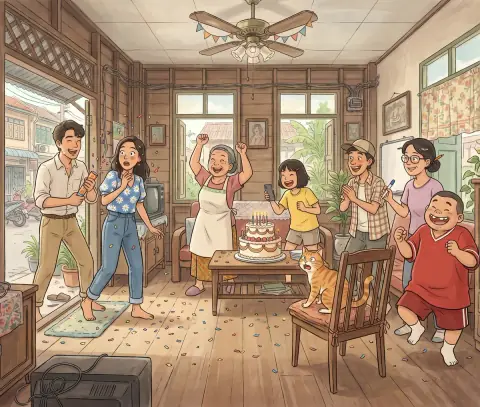
Mali’s birthday
วันเกิดมะลิ
Hugo organises a surprise party. Yai cooks all day, Lek fetches the guest of honour, and Mali won’t say how old she is.

The photo
รูปของส้ม
Nok takes a hundred photos of Som. One of them, with Hugo’s hat, is going to follow him around forever.
Keep reading
Basic Thai Words: Hello, Thank You and the First Phrases to Learn
The basic Thai words to learn first: hello with the wai, thank you, sorry, never mind, yes and no, please, how are you, goodbye and “I don’t understand”.

Thai Numbers: How to Count from 1 to 1,000,000
Learn Thai numbers from 0 to a million: the ten digits, the two irregular numbers, how to build any number, Thai numerals and how to read prices.
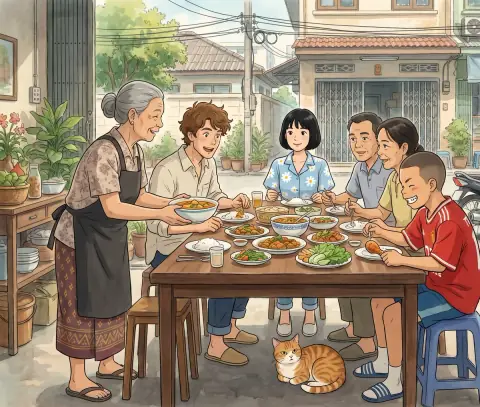
Thai Family Words: Mother, Father, Siblings, Grandparents and More
Every Thai family word you need: พ่อ, แม่, พี่, น้อง, the four grandparents, uncles and aunts by age and side, and why you call a waiter พี่.